
All projects
We conduct research and development within fire and security. We have modern testing facilities where we can develop innovative and green solutions.
We conduct research and development within fire and security. We have modern testing facilities where we can develop innovative and green solutions.
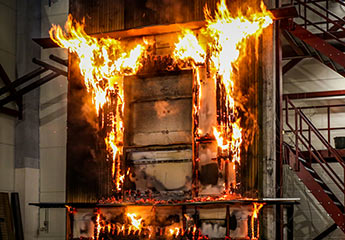
This PhD project aims to develop a model describing the mobility and leaching of fire retardants in wood, driven by moisture transport.
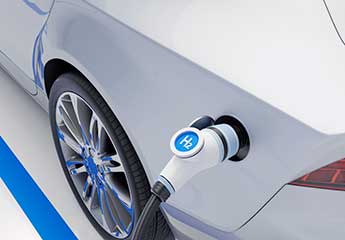
The NordicH2ubs project, led by SINTEF Industry, aims to develop Nordic hydrogen valleys by 2040, focusing on technology, safety, and energy systems. In it, DBI examines safety at Hydrogen Refueling Stations with an emphasis on fire and explosion risks.
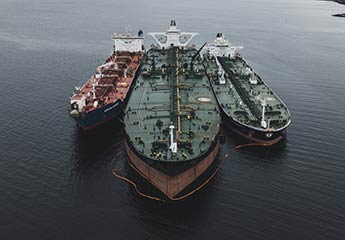
Ports in Denmark will be crucial for the Power-to-X industry, serving as storage and transit points for e-fuels. This introduces new risks and requires new skills. The project aims to ensure safety by providing tools for best practices in handling P2X fuels.
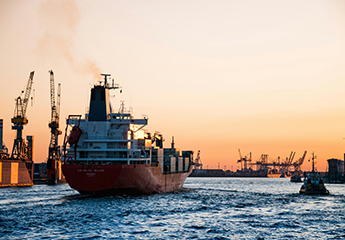
The research project SEA-PtX supports Denmark's decarbonization strategy by accelerating the implementation of green Power-to-X (PtX) technologies in Danish ports as future green energy hubs. It explores safety and ethical issues of PtX infrastructure and develops guidelines for citizen engagement and safety in new PtX projects.
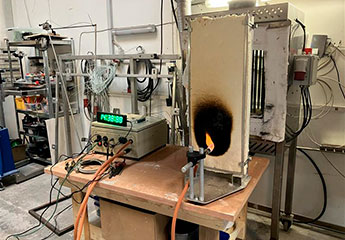
Bio-based insulation materials offer great potential for reducing the CO2 footprint in constructions.
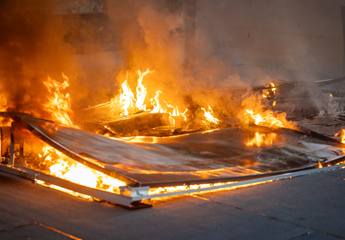
Major fires involving roof surfaces with solar panels in recent years have created growing concern at a time when the green transition and European energy independence are more important than ever.
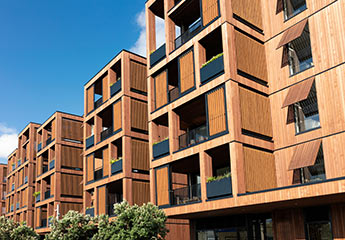
This project develops a tool for optimizing fire safety in sustainable biobased buildings. It integrates life cycle assessments (LCA) early in the design process to reduce carbon emissions. The tool provides architects and fire safety engineers with guidelines and generic designs to achieve LCA-optimized fire safety. Overall, it aims to transform the industry towards more holistic and sustainable building design approaches.
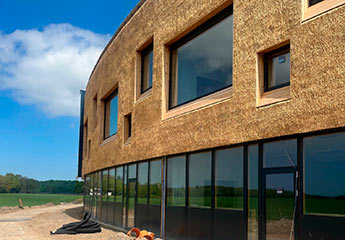
This project enables the use of sustainable building facades to reduce CO2 emissions and energy consumption. However, combustible materials and energy-saving solutions in these facades pose fire risks. The project introduces a reliable method for approving wood cladding facades, with fire models and assessments to predict fire behavior.

As societies adopt renewable energy sources, there's a rising need for technologies converting intermittent electricity into valuable products (Power-to-X). Hydrogen, a key element in P2X , poses safety challenges due to its flammability and leakage risks. This project develops computational frameworks to simulate and predict hydrogen-related scenarios, enhancing the safety and efficiency in hydrogen use.
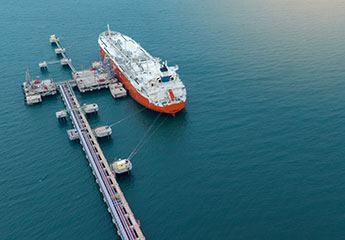
Alternative fuels for shipping have great potential for green transition, and methanol, ammonia, and hydrogen are the most promising options today. The maritime industry faces changes and major decisions related to decarbonization in the near future. The METAFUEL project is developing a matrix-based method to support decisions for maritime stakeholders related to these new fuel types, including the application and relevance of technologies, equipment, and strategies for handling fire safety for alternative fuels.
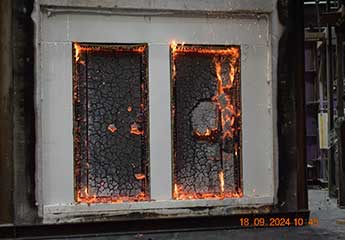
With stricter CO2 requirements for new construction and a new law on selective demolition that came into effect in the summer of 2024, there are now even more reasons to invest heavily in reuse within the construction industry. Reusing fire doors can be a way to achieve significant resource savings - both in terms of materials and economically.

As renewable energy production increases, it is anticipated that there will be more resistance from local citizens and interest groups. To address this issue, a national model for involving citizens in renewable energy systems will be developed through this project. DBI is participating in the first phase of the project, which involves creating tools that are driven by citizens to prevent and manage conflicts.
Kontakt en af vores 3 afdelingsledere